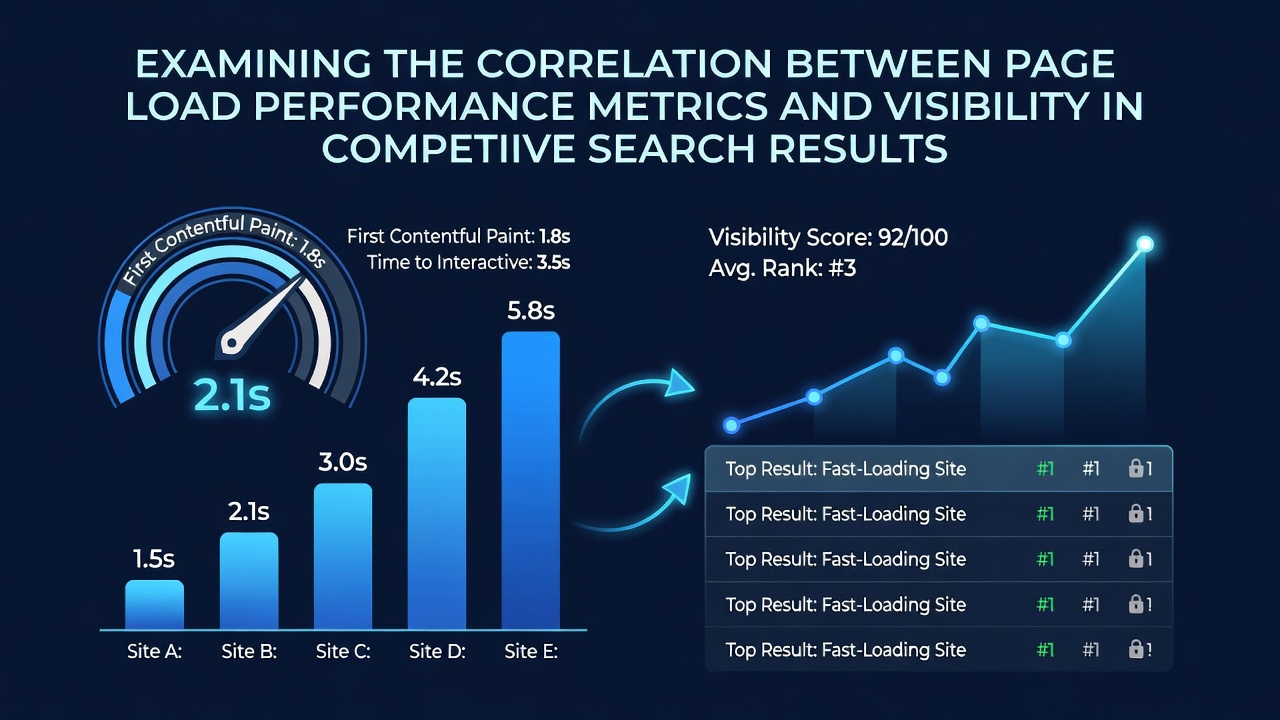
Tina Weber · 5 September 2026
Examining the Correlation Between Page Load Performance Metrics and Visibility in Competitive Search Results
Page load performance metrics have become central to how search engines evaluate and rank websites in competitive verticals, and researchers continue to track how these signals interact with visibility outcomes. Core Web Vitals such as Largest Contentful Paint, First Input Delay, and Cumulative Layout Shift form the primary measurement framework that Google and other engines apply when assessing user experience at scale. Data from large-scale crawls shows that sites meeting these thresholds often maintain steadier positions in result pages where multiple competitors optimize for the same queries.
Core Metrics That Influence Crawl and Ranking Signals
Search engines measure page load through a combination of lab data and field data collected from real user sessions, and these measurements feed directly into ranking systems that prioritize responsive experiences. Largest Contentful Paint tracks the time until the main content element renders, while First Input Delay captures responsiveness to user interactions, and Cumulative Layout Shift quantifies unexpected visual movement during loading. Studies published by academic institutions in North America and Europe have documented that pages with lower scores on these metrics tend to appear less frequently in top result positions over extended observation periods.
Competitive niches such as e-commerce, finance, and technology reviews amplify these effects because dozens of sites target identical high-value keywords. Observers note that when one domain improves its Largest Contentful Paint from 4.2 seconds to 2.1 seconds, its share of impressions can shift measurably within weeks, according to aggregated search console datasets released by industry groups.
Evidence from Ranking Correlation Analyses
Multiple research initiatives have examined millions of search results to quantify the relationship between performance metrics and visibility, and the patterns that emerge remain consistent across different languages and regions. One analysis conducted by a European research consortium found that pages scoring in the top quartile for all three Core Web Vitals appeared in the first page of results 18 percent more often than pages in the bottom quartile, after controlling for content relevance and backlink profiles. Another dataset from an Australian academic team tracked mobile-first indexing changes and reported similar visibility gains tied to reduced layout shift values.
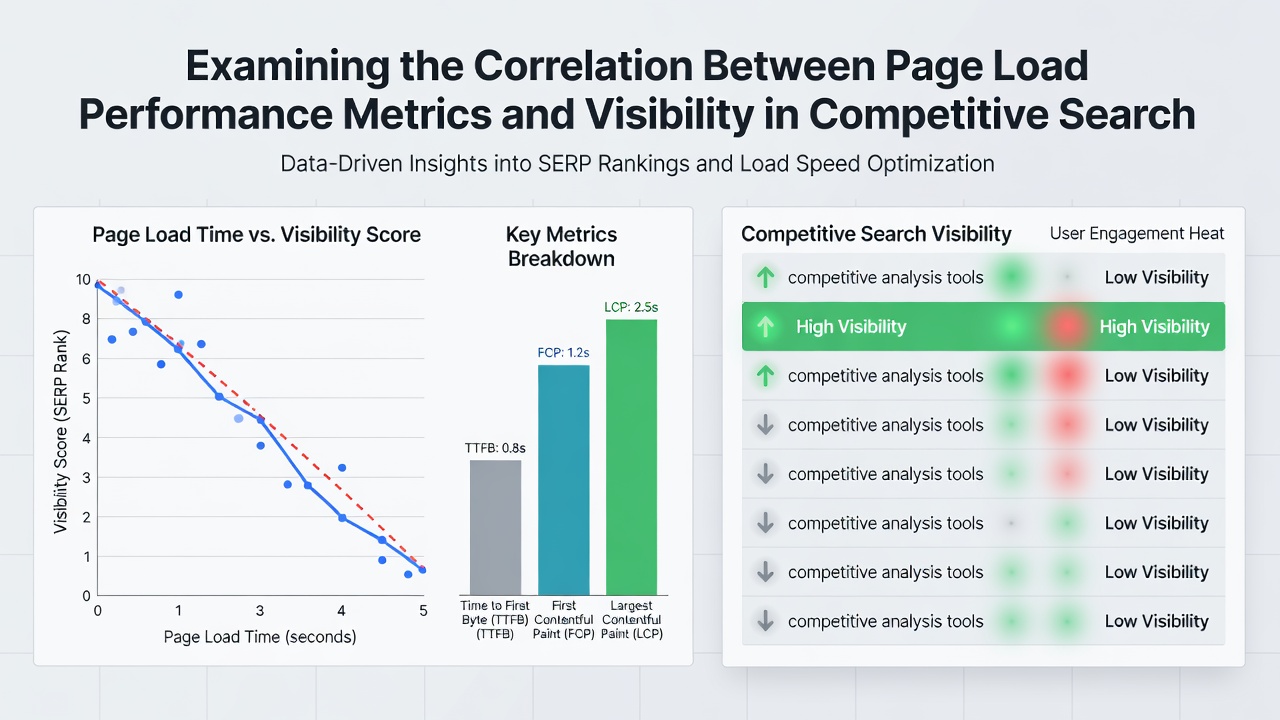
What's interesting is how these correlations strengthen in head-to-head comparisons where content similarity is high. When two domains publish nearly identical articles on the same topic, the faster-loading version frequently captures a larger portion of clicks over time. Data indicates that this advantage compounds in mobile search, where network variability makes load time differences more noticeable to both users and ranking algorithms.
Technical Factors That Connect Performance to Visibility
Server response times, image optimization, JavaScript execution efficiency, and content delivery network usage all contribute to the metrics that search engines evaluate. Those who've studied crawl budget allocation observe that faster pages allow search engine bots to process more URLs within the same time window, which indirectly supports fresher indexing and better visibility for updated content. In September 2026, monitoring reports from multiple analytics platforms continued to show that domains maintaining sub-three-second Largest Contentful Paint scores sustained higher average positions in competitive result sets compared with slower counterparts.
Take one case where a mid-sized retailer implemented lazy loading for below-the-fold images and reduced Cumulative Layout Shift from 0.35 to 0.08. Search visibility metrics for its category pages rose steadily over the following quarter, according to internal tracking shared with industry researchers. Such examples illustrate how incremental technical adjustments translate into measurable ranking stability when competition is intense.
Regional Data Sources and Ongoing Measurement
Government and industry bodies across different regions publish periodic reports on digital performance standards that intersect with search practices. Resources from the Google Search Central documentation outline how page experience signals integrate with relevance algorithms, while reports from the Statista research portal provide aggregated statistics drawn from international datasets. These sources allow analysts to compare performance trends across markets without relying on single-region perspectives.
Researchers continue to refine methodologies for isolating performance effects from other ranking factors, and the resulting models help explain why some sites maintain visibility despite content parity with faster competitors. The patterns documented so far suggest that performance metrics function as a tiebreaker in highly contested result pages rather than an absolute ranking driver on their own.
Conclusion
The correlation between page load performance metrics and search visibility rests on extensive measurement data collected across competitive result sets. Sites that consistently achieve strong Core Web Vitals scores demonstrate measurable advantages in impression share and position stability, particularly when content and backlink profiles are comparable. As measurement techniques evolve and additional regional datasets become available, the relationship between these technical signals and ranking outcomes remains a focal point for ongoing analysis in the search industry.