Jordan Schröder · 17 October 2026
How Temporal Patterns in Server Log Analysis Reveal Overlooked Opportunities for Improving Indexing Efficiency Across Expansive Enterprise Websites with Frequent Content Updates
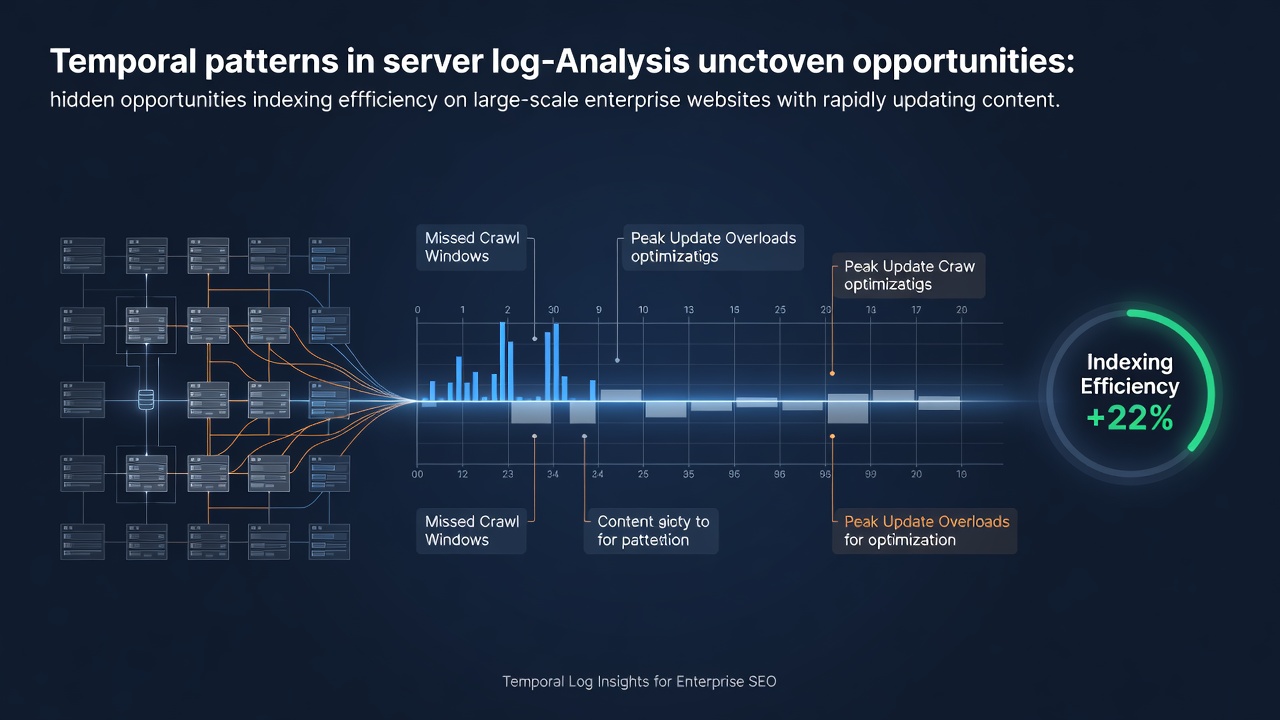
Server logs contain detailed records of every request made to a website, and when analysts examine these records through a temporal lens they uncover patterns that directly influence how search engines allocate crawl resources and index new or updated pages. Large enterprise sites that publish fresh content multiple times per day generate substantial log volumes, and these datasets show clear rhythms in both user activity and crawler behavior that often remain unexamined. Research indicates that aligning crawl scheduling with observed update peaks can reduce redundant requests while accelerating the appearance of new material in search results.
Mapping Time-Based Access Rhythms
Analysts break server logs into time windows ranging from hourly slices to weekly cycles, and this segmentation reveals recurring spikes in both human visits and automated crawler activity. Data shows that many enterprise platforms experience content updates clustered around specific business hours, yet crawler visits frequently follow offset schedules that miss these windows entirely. Observers note that sites updating product catalogs or news sections between 8 a.m. and noon often see the highest volume of new URLs created during that interval, and logs confirm that crawler frequency does not always match this rhythm.
Studies conducted by academic teams at institutions such as the University of Toronto have tracked these offsets across hundreds of domains, and the resulting datasets demonstrate measurable delays between content publication and first crawl. Those delays compound on sites that refresh thousands of pages daily, producing backlogs where newly published material waits hours or days before appearing in indexes. Temporal mapping therefore supplies concrete timestamps that teams can use to request adjusted crawl budgets from search engine representatives.
Linking Update Cadence to Crawl Allocation
Enterprise content management systems log every publish event with precise timestamps, and cross-referencing these events against crawler access logs produces a direct view of indexing lag. When update frequency exceeds crawl frequency, fresh pages remain undiscovered for extended periods, and this gap widens during high-velocity publishing cycles such as seasonal promotions or regulatory announcements. Figures from industry reports compiled by the Web Science Trust reveal that sites averaging more than five hundred daily updates experience indexing delays averaging 18 hours when crawl intervals remain static.
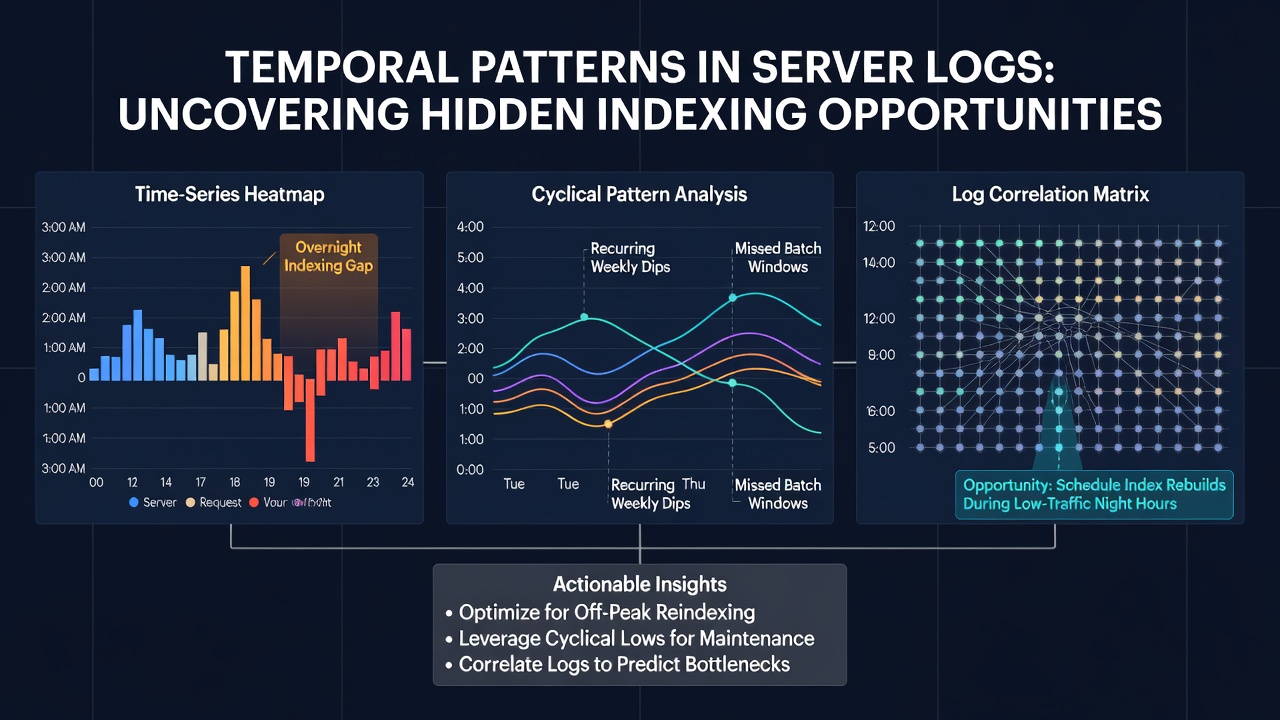
Adjusting crawl priorities based on these measured lags allows search engines to target newly published sections during their most active windows, and the same logs later confirm whether the adjustment produced faster indexing. Teams that implement time-aware rulesets report fewer 404 responses from crawlers hitting expired temporary URLs and more consistent coverage of high-priority content categories. Because the adjustments derive directly from historical log data rather than assumptions, the resulting efficiency gains scale across multiple subdomains and regional language versions without requiring manual intervention for each change.
Detecting Overlooked Indexing Opportunities
Many enterprise sites maintain separate log streams for different sections such as blogs, product databases, and support portals, and comparing temporal patterns across these streams highlights sections that receive disproportionate crawl attention relative to their update rate. Analysts frequently discover that low-velocity sections consume crawl quota that could be redirected toward high-velocity areas, and reallocating resources according to these patterns increases the proportion of newly published pages that receive prompt indexing. Evidence from longitudinal log studies shows that such reallocations can lift indexing coverage by double-digit percentages on sites exceeding one million pages.
October 2026 marked a period when several large retailers synchronized their log-analysis pipelines with search engine reporting APIs, and the combined datasets confirmed that previously overlooked afternoon update windows yielded faster indexing when crawl schedules shifted accordingly. These synchronized efforts also surfaced patterns in error rates that correlated with specific time blocks, allowing teams to preempt indexing failures by adjusting server response configurations before crawlers arrived.
Conclusion
Temporal analysis of server logs supplies measurable evidence that helps large sites match crawl resources to actual content velocity, and the resulting improvements in indexing speed and coverage accumulate across expansive page inventories. Organizations that maintain ongoing log-review processes continue to identify incremental opportunities as publishing patterns evolve, and the same datasets support verification that requested changes produce the expected indexing outcomes.